Steinway Grand Piano Restoration & Rebuilding

Steinway Grand Piano Restoration focused on preserving and restoring the performance, touch and voice of each instrument.
Butler & Sons Piano Restorations provides comprehensive Steinway restoration and rebuilding, from precision action work and regulation, touch-weight analysis and redesign, soundboard and bridge restoration, pinblock replacement and complete re-stringing.
Every restoration begins with a careful evaluation of the individual instrument. The goal is not simply to replace worn components, but to preserve the character of the piano while restoring the performance, responsiveness and tonal qualities expected of a fine Steinway.
Action Restoration & Regulation
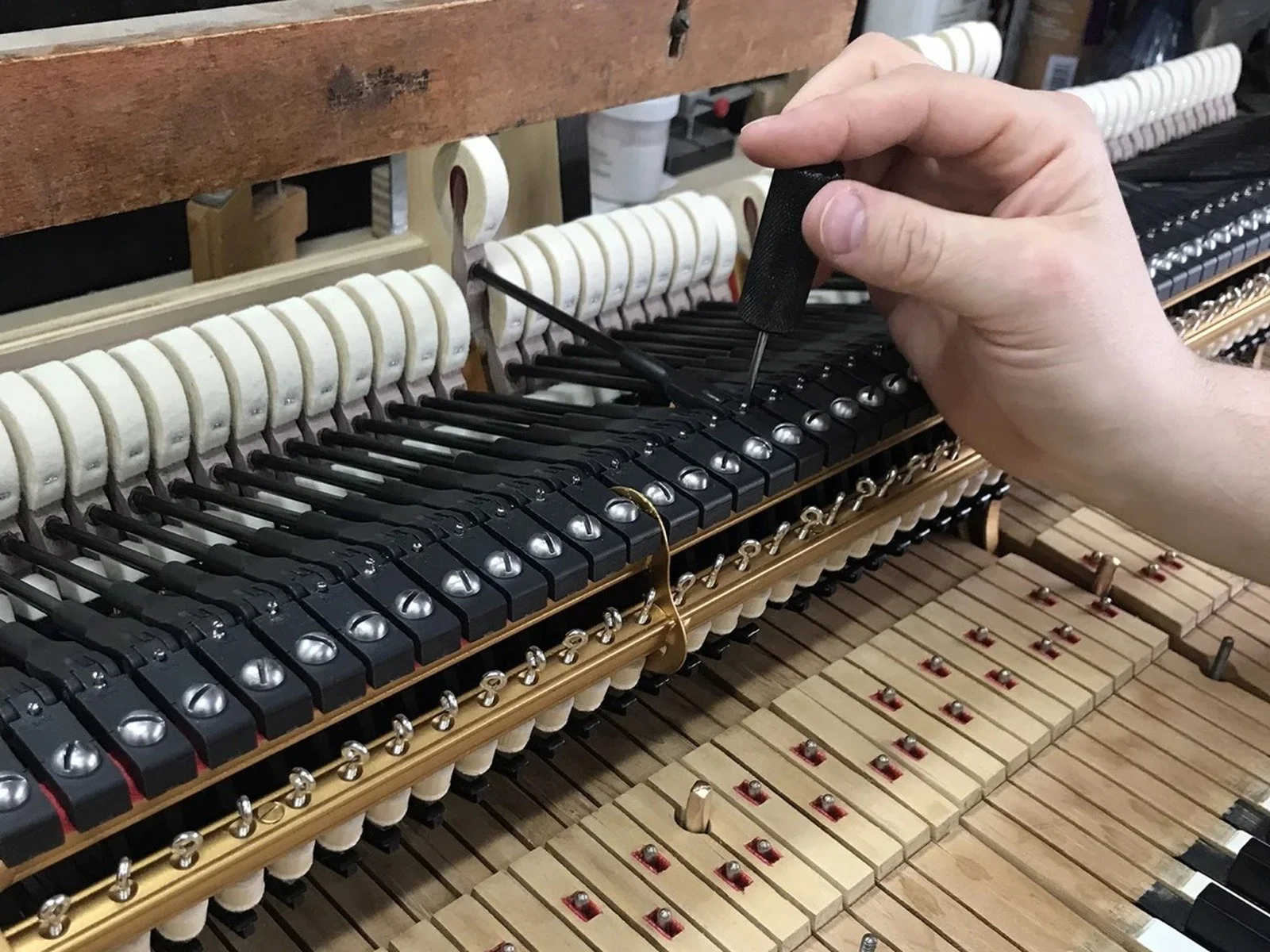
A finely regulated action allows the pianist to control the instrument with precision and ease. We restore and regulate Steinway actions with careful attention to geometry, friction, touch weight, repetition and evenness across the keyboard.
Depending on the needs of the instrument, this may include replacement or restoration of hammers, shanks, flanges, repetitions, key bushings, complete keysets when needed and other action components, along with detailed regulation and voicing.
Stanwood Certified Touchweight Installer
John Butler is a Stanwood Certified Touchweight Installer, with specialized training in the analysis and refinement of grand piano touchweight. This allows the action to be evaluated and balanced as a complete system—helping provide greater control, consistency and responsiveness across the keyboard.
Soundboard & Bridge Restoration
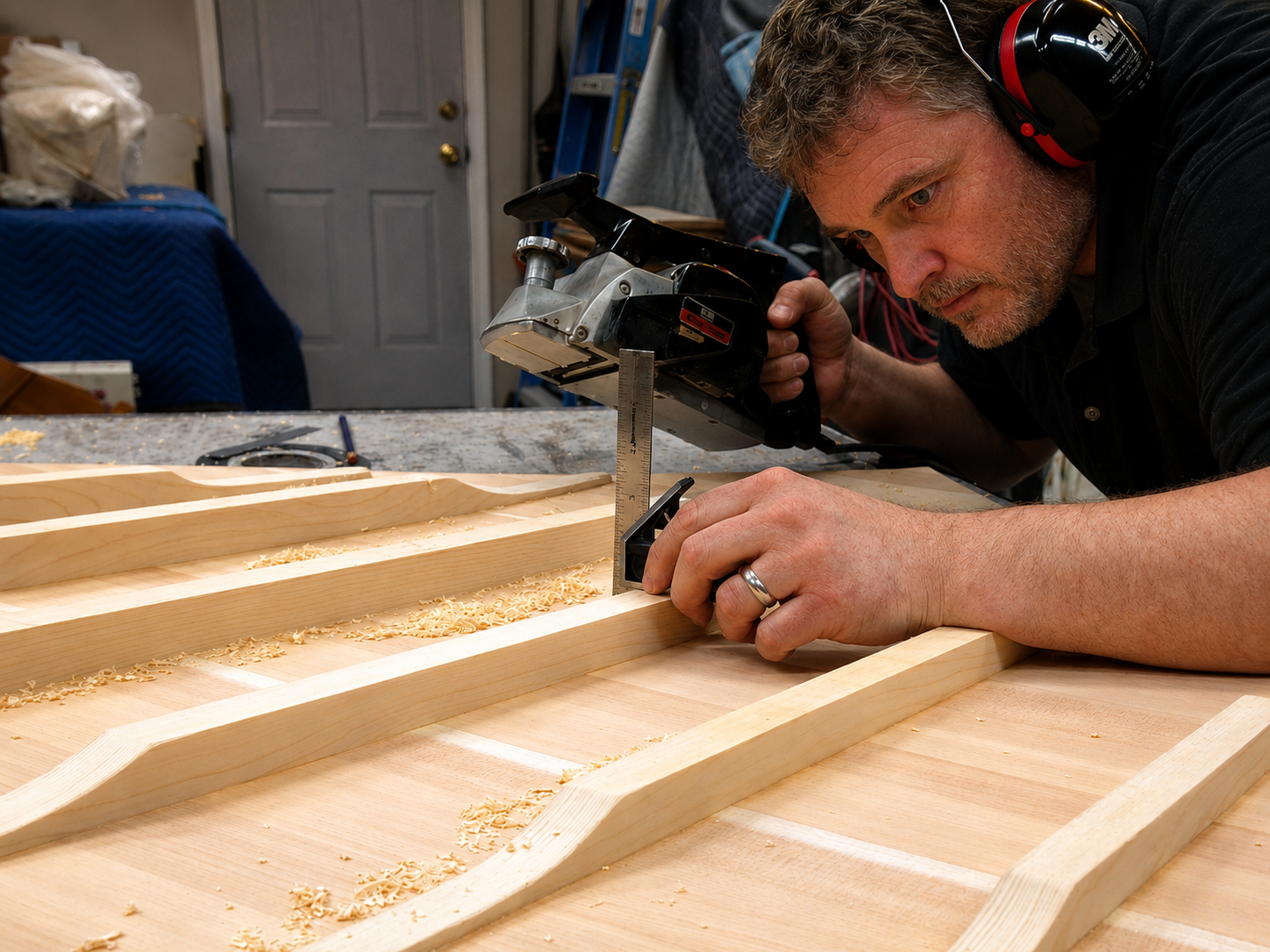
The soundboard and bridges are at the heart of the piano’s tonal structure. We carefully evaluate their condition to determine wether restoration or replacement will best preserve the musical character and long term stability of the instrument.
Soundboard work may include repair of cracks and separations, rib repair, or complete soundboard replacement. New soundboards are carefully constructed and fit to the individual piano, with attention to crown, bearing and the tonal character of the instrument. Bridges are restored or replaced as needed, with close attention paid to bridge pinning & spacing, string bearing and proper termination.
Pinblock & Restringing
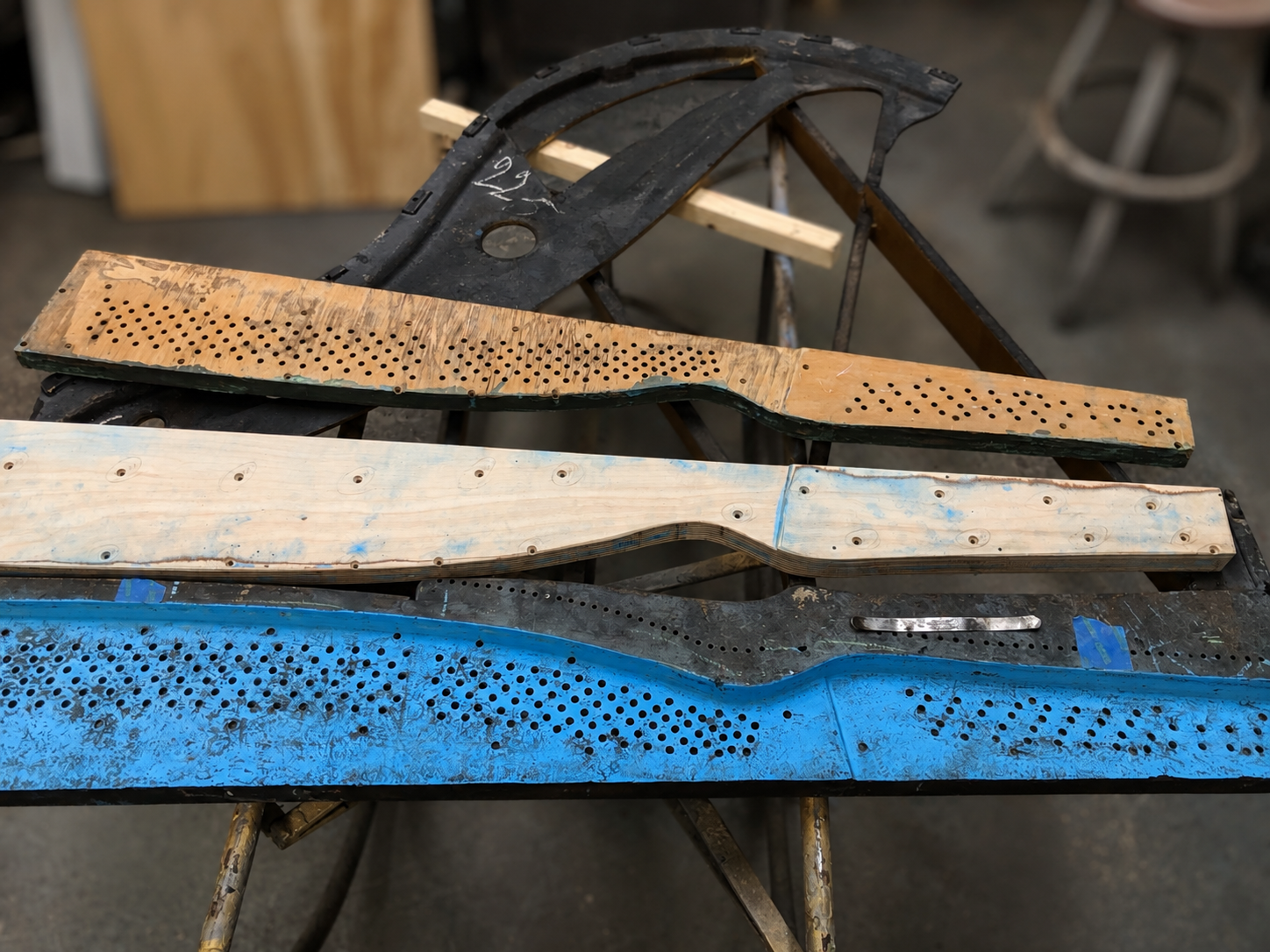
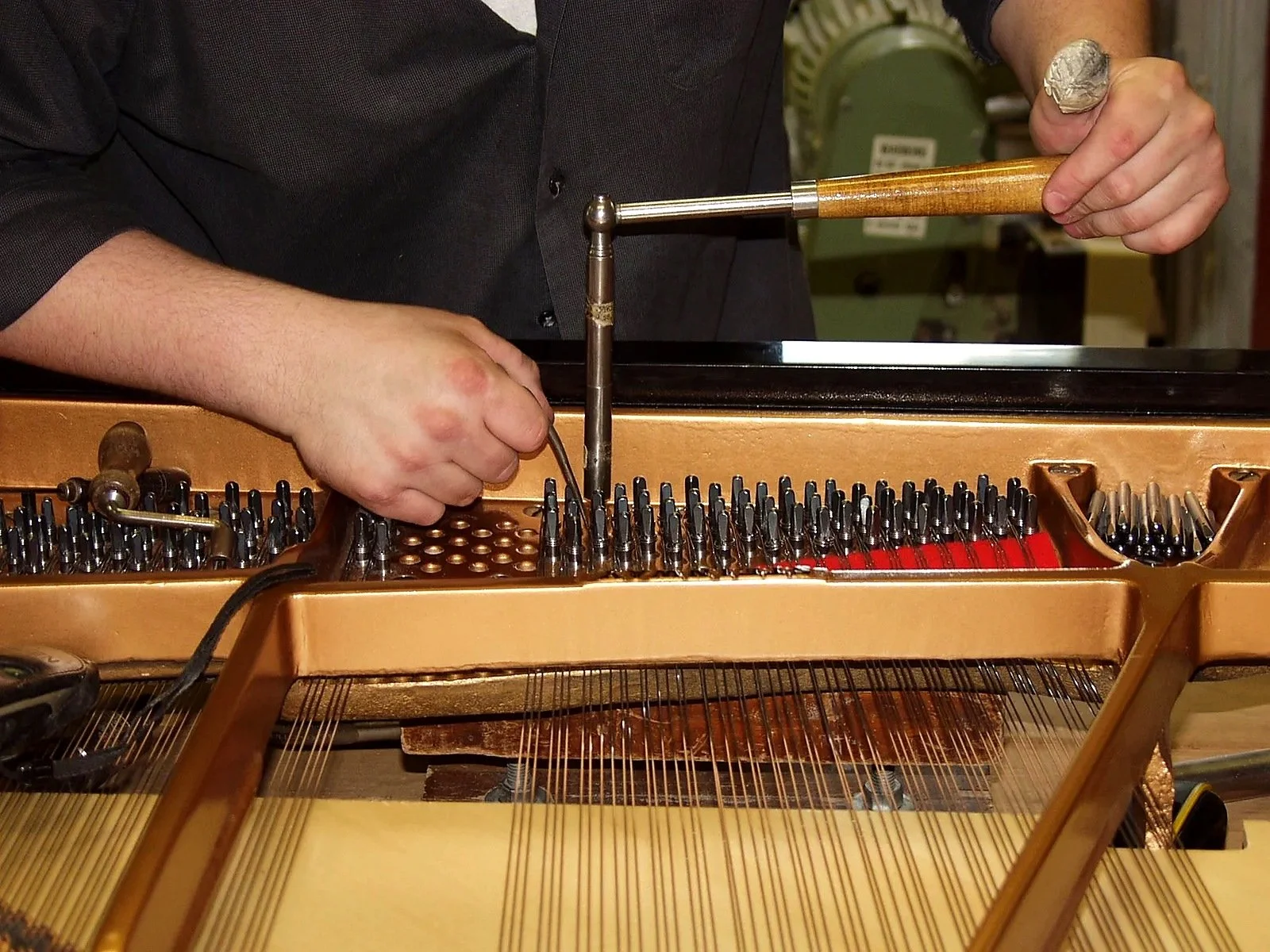
The pinblock and stringing system are essential to tuning stability and the structural integrity of the piano. We carefully evaluate the existing pinblock, tuning pins and strings to determine what work is appropriate for each instrument.
When replacement is necessary, a new pinblock is carefully and painstakingly fitted to both the plate and case, drilled and prepared for proper tuning pin fit and torque. The piano is then restrung with new music wire and custom-made bass strings, with careful attention to string scaling, bearing and termination.
Hammers & Voicing
The hammers have a profound influence on the tone, color and dynamic range of a piano. Hammer selection is carefully matched to the individual instrument, taking into consideration its scale, action geometry, weight, and tonal character we are working to achieve.
After installation, the hammers are carefully shaped and weight prepped. We can then begin action regulation. Once regulation is complete, the hammers are mated to the strings and voiced.
Does my Steinway Need to Be Rebuilt?
Not every older Steinway needs a complete rebuild. Some instruments may only need action work, regulation, voicing or other targeted repairs, while others have reached the point where more extensive restoration is appropriate.
The decision begins with a careful evaluation of the entire piano- including the soundboard, bridges, pinblock, strings, action and dampers- as well as how the instrument is being used and what the owner hopes to achieve. From there, I can recommend a scope of work that makes sense for that particular piano.
The goal is not to do the most work possible. It is to do the right work for the instrument.
Considering Restoration for Your Steinway?
If you have an older Steinway and would like to better understand its condition and what work may be appropriate, contact John Butler, RPT to discuss the instrument and arrange an evaluation.